



Gitega Market Caught Between Fire-Safety Lockdown and Suffocation of Nearby Traders

Central Region/Gitega: Gitega Market Caught Between Fire-Safety Lockdown and Suffocation of Nearby Traders
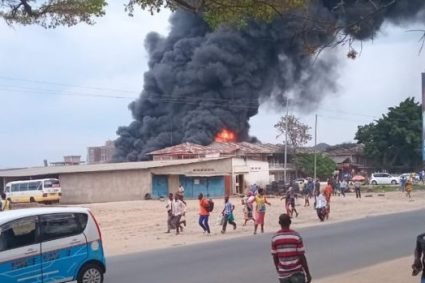
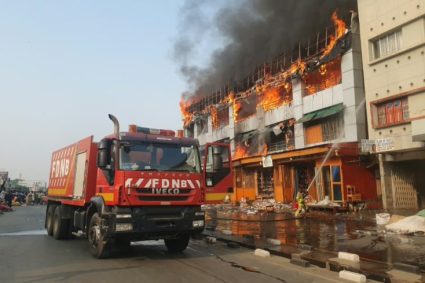
Following the devastating fires that have ravaged several commercial centers across the country, the administration and police in Gitega are locking down the central market from 5 p.m. But this strict security measure is also affecting traders and neighborhoods surrounding the market. Those affected are denouncing nighttime police harassment, which is reigniting tensions.
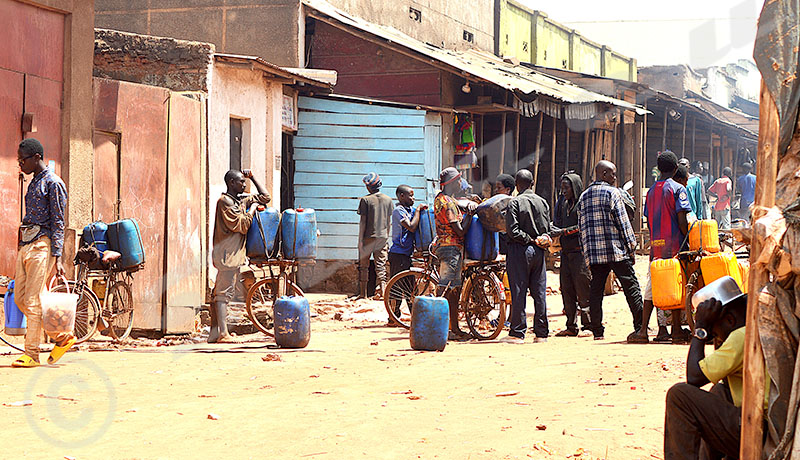
One of the businesses located next to the market that closes at the same time as the central market.
From 4 p.m. onward, a frenzy takes hold of the stalls at Gitega’s central market. Cardboard boxes are hastily put away, stalls are quickly closed, and padlocks click into place as traders comply without protest. From 5 p.m., an eerie calm settles inside the market. Around the building, barriers are erected to form a fire-safety perimeter.
On the ground, however, the enforcement of the measure sparks strong protests once one moves a few hundred meters away from the main building. In the adjoining streets, anger is growing among the operators of shops, warehouses, storage facilities and bars. Although their businesses are located outside the main market premises, these economic operators are being subjected to the same restrictions on working hours. They consider the measure abusive and economically unsustainable.
“We are being treated as if we were inside the central market,” complains a bar manager who requested anonymity.
According to him, regulations prohibiting them from opening bars before noon were already strangling their businesses. They now wonder what time they are supposed to work if they are forced to close at 5 p.m.
“It is precisely in the late afternoon that customers start coming in after their workday. Between high rents and mounting expenses, our businesses are dying,” adds his colleague, who sells banana beer.
For these traders, the resulting loss of income is therefore enormous.
Beyond the commercial impact, the security measures are disrupting everyday city life. Surrounded by several major roads leading to the residential neighborhoods of Nyabisindu and Shatanya III, the market has become a difficult obstacle to navigate after nightfall. Residents returning from work encounter police roadblocks on a daily basis.
This forces them to take detours. The behavior of some officers deployed along the roadblocks is also causing deep resentment among local residents. Testimonies point to excessive enforcement that sometimes turns into brutality.
“Getting home in the evening has become an obstacle course,” says a resident of Nyabisindu.
He says that simply taking a familiar road near the market can lead to accusations of attempting to approach the market premises. There are also reports of arbitrary fines, pushing and shoving, and even people being stripped of their money or arrested without a clear reason.
Amid these alleged abuses, the social climate remains tense. Despite the accumulated losses and the abuses being reported behind the scenes, none of the victims has yet filed an official complaint. Such caution is reportedly driven by fear of facing direct judicial or security-related repercussions.
“No one dares to file a complaint or raise their voice with the authorities. We fear being labeled as criminals or accomplices who might be trying to set the market on fire. So everyone keeps quiet and suffers in silence,” explains a trader in the area.
We were unable to obtain the position of the local administration or the police in response to the complaints raised by those affected.