
President Évariste Ndayishimiye of Burundi has arrived in New Delhi

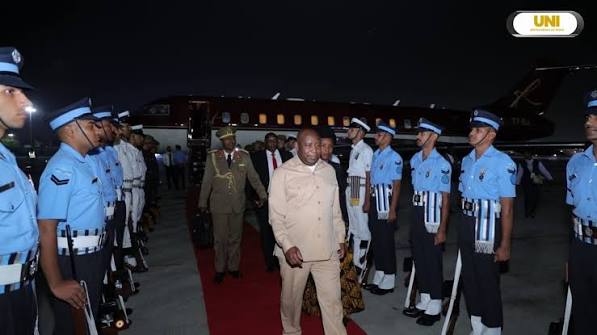
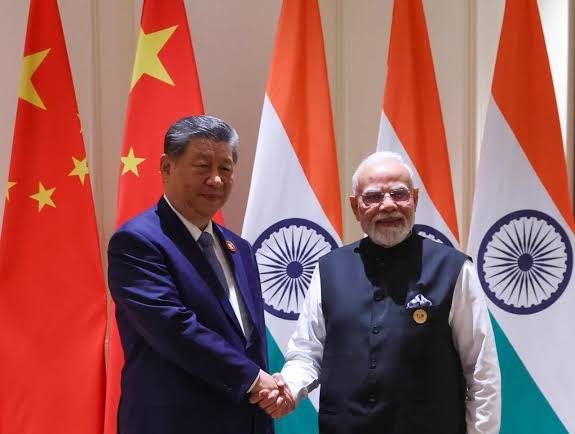
President Évariste Ndayishimiye of Burundi has arrived in New Delhi to participate in the 18th BRICS Summit.
President Ndayishimiye arrived in the Indian capital on September 11, accompanied by First Lady Angeline Ndayishimiye. He was received at Air Force Station Palam as he joined other international leaders and representatives attending the major summit.
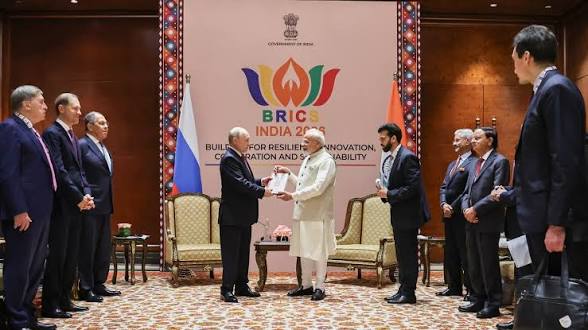
The summit is being held under India’s 2026 BRICS presidency with the theme “Building for Resilience, Innovation, Cooperation and Sustainability,” while India has promoted a people-centred approach under the principle of “Humanity First.”
President Ndayishimiye’s participation is important because Burundi is part of the wider African voice represented at the summit. His presence provides an opportunity to present African priorities in discussions involving some of the world’s largest emerging economies.
For Africa, BRICS provides an important platform for discussing development, investment, trade, infrastructure, technology, food security, energy and reforms to international institutions.
BRICS is a cooperation platform bringing together major emerging economies. In 2026, its 11 members are Brazil, China, Egypt, Ethiopia, India, Indonesia, Iran, Russia, Saudi Arabia, South Africa and the United Arab Emirates.
The group is not a military alliance. Its principal purpose is to strengthen cooperation among emerging economies and give developing and emerging countries a stronger voice in global affairs.
One of the main objectives of BRICS is to increase trade and investment among member countries. Members discuss ways to make trade easier, improve investment opportunities and strengthen economic links. The group is also working on cross-border payments and greater use of members’ national currencies in trade.
BRICS also seeks to increase the voice of developing countries in international decision-making. The group supports reforms of major international institutions, including the United Nations and international financial institutions, so that developing countries can have greater representation.
Another important area is development financing. The New Development Bank, established by BRICS, finances infrastructure and sustainable-development projects. These can include transport, energy, water infrastructure and other projects that support economic development.
Technology and innovation are also becoming increasingly important areas of BRICS cooperation. Countries are discussing digital infrastructure, artificial intelligence, innovation and new technologies. For developing countries, cooperation in these areas can help improve digital services, education, agriculture, healthcare and financial inclusion.
Food and agricultural security are also priorities. BRICS cooperation includes agricultural research, digital agriculture and other initiatives designed to improve food production and strengthen agricultural systems. These issues are particularly important for African countries, where agriculture remains a major source of employment and income.
Climate change and sustainable development are additional areas of cooperation. BRICS countries are discussing renewable energy, climate resilience, environmental protection and sustainable economic development. These issues are especially significant for Africa because many African economies are vulnerable to droughts, floods and other effects of climate change.
Health cooperation is another part of the BRICS agenda. Members are working on areas including medical cooperation, health systems, mental health and professional training. Such cooperation can help countries exchange knowledge and strengthen their health sectors.
For Burundi, President Ndayishimiye’s participation provides an opportunity to seek stronger economic and development partnerships with BRICS countries. Areas of potential interest include foreign investment, trade, infrastructure financing, agriculture, digital transformation, technology, energy, health and education.
Burundi can also use the summit to promote its economic interests and highlight the development priorities of Africa. Engagement with major emerging economies could create opportunities for new markets, investment and technical cooperation.
The New Delhi summit comes at a time when the international economic and political system is undergoing significant changes. Emerging economies are seeking a stronger role in global decision-making, while developing countries are looking for greater access to investment, technology, markets and development financing.
India’s 2026 BRICS presidency has focused on practical cooperation and development. The programme has included meetings and activities addressing economic, financial, technological, health, agricultural and people-to-people cooperation.
President Ndayishimiye’s presence in New Delhi therefore represents more than diplomatic participation. It provides Burundi and Africa with an opportunity to engage directly with major emerging economies and advocate for partnerships that can support economic growth and sustainable development.
For Burundi and Africa more broadly, the key issue is how BRICS cooperation can be translated into practical results, including more investment, stronger trade, better infrastructure, technology transfer, improved food and energy security, and greater African representation in global institutions.
The 18th BRICS Summit in New Delhi is consequently an important platform for discussing the future of cooperation among emerging economies and the role of Africa in the evolving global order.