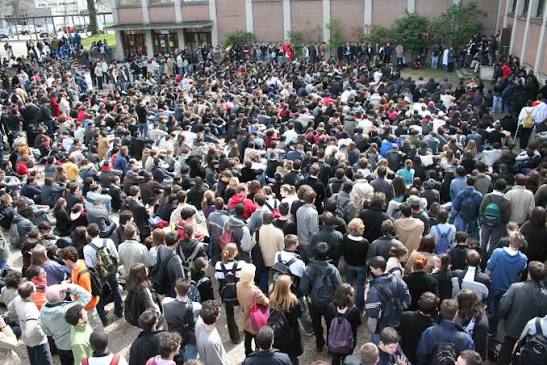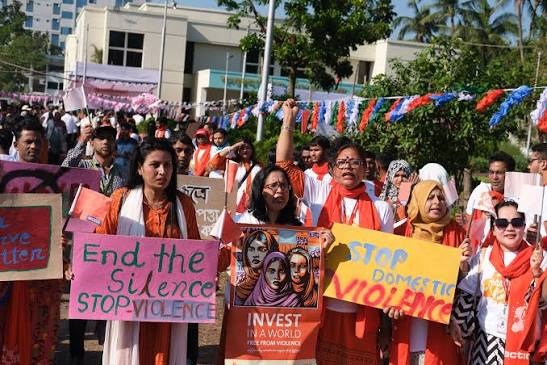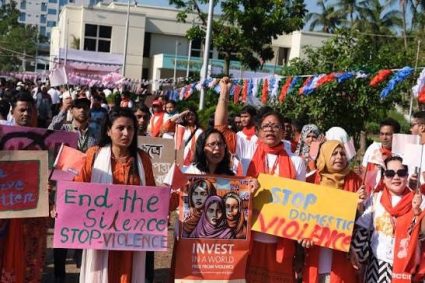





Hundreds of thousands of people took to the streets across France on Saturday protesting against the rising cost of living.

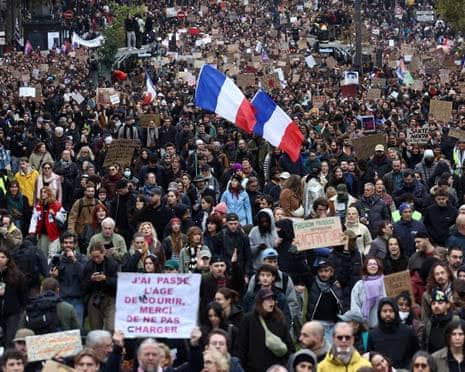
Hundreds of thousands of people took to the streets across France on Saturday, October 24, protesting against the rising cost of living, concerns over education funding, and pressure on public services.
The demonstrations brought together students, workers, trade union members and supporters of the Yellow Vest movement, putting renewed pressure on President Emmanuel Macron’s government.
According to France’s Interior Ministry, approximately 410,000 people participated in demonstrations nationwide, including around 110,000 in Paris. However, the CGT trade union estimated the total turnout at nearly 800,000.
The protests, which took place in several French cities, were largely peaceful during the main marches. However, tensions escalated in Paris and other locations towards the end of the demonstrations, leading to clashes between some protesters and police.
Authorities reported that police made nearly 1,000 arrests, with the total expected to increase as additional cases were processed.
The demonstrations reflect growing public frustration over the cost of living and the state of France’s education system.
Students and high school pupils are demanding more teachers, better-maintained school buildings and increased funding for schools and universities. Some student organisations are also calling for more places in higher education, improved financial assistance and affordable student housing.
Workers and other demonstrators are raising concerns about rising energy prices, household expenses, poverty and economic inequality.
The movement initially gained momentum through protests over staffing shortages and conditions in schools before expanding to include broader social and economic demands.
French authorities deployed approximately 70,000 police officers and security personnel across the country to prevent a repeat of the widespread violence and looting reported during demonstrations the previous weekend.
In Paris, the march began peacefully, but clashes broke out near its endpoint when some masked protesters threw objects and fireworks at police. Officers responded with tear gas, sound grenades and water cannons.
Violence was also reported in several other cities, including Lyon, Marseille, Nantes and Rennes. Authorities had imposed restrictions or bans on demonstrations in some locations amid concerns about public safety.
Despite these incidents, officials said the security operation helped limit the scale of the disorder compared with the previous weekend.
The demonstrations represent a significant challenge for President Emmanuel Macron as France approaches the final months of his presidency ahead of the next presidential election, scheduled for 2027.
The unrest has also intensified political debate over government spending, public services, policing and the right to demonstrate.
For many participants, the protests are not only about education or household expenses, but also about social justice and whether the government is responding adequately to the concerns of ordinary citizens.
As France continues to face mounting social and economic tensions, attention is now turning to how the government will respond to the demonstrators’ demands.
The scale of Saturday’s mobilisation shows that concerns over living costs, education and public services remain central issues in the country’s political debate.