


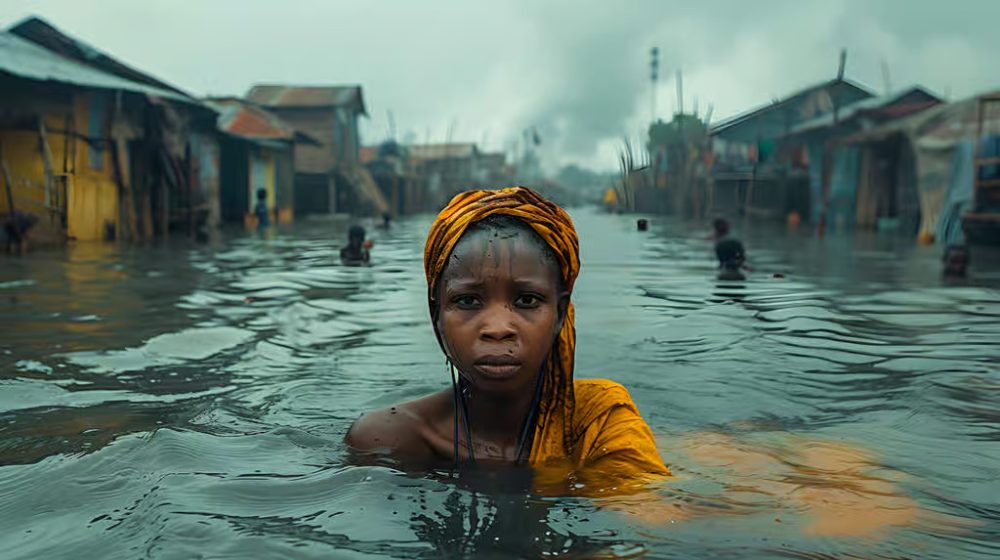
Night falls over Burundi’s hills. Houses shake under the rain, streams swell and sweep everything away in their path. In the damp silence of makeshift shelters, some women experience the true cost of disasters: not just roofs blown away or flooded fields, but overcrowding, fear and daily humiliation.
These women are not alone in this ordeal. In 2025, nearly 80,000 Burundians were forced to flee their homes because of floods and landslides.
More than half of them were women and children, and this figure reflects only part of the invisible consequences—those that do not appear in official reports: threatened health, violated dignity and compromised safety.
Inside hastily erected tents, their daily lives become a silent struggle.
How can they change their clothes or manage their menstrual periods when there is no clean water, no private space and no lighting to protect them from prying eyes and the dangers of the night?
In these overcrowded shelters, every intimate act becomes a challenge, and every moment of darkness a threat.
Climate change destroys more than walls. It also undermines human dignity.
Without sanitary pads, some women improvise with pieces of cloth, putting themselves at risk of infections.
Without adequate sanitation facilities, they face daily humiliation.
And while their health deteriorates, they continue to carry children, care for the elderly and feed their families—as though the disaster had not already drained them of their own strength.
We speak of “shelters,” but can they truly be considered safe when privacy is absent, security is uncertain and women’s needs are pushed to the background?
A dignified refuge should provide lighting, clean water, separate sanitation facilities, appropriate hygiene kits and security measures designed with women’s safety in mind.
Yet, too often, the facilities provided offer only partial protection.
And still, women are not merely victims. Their daily lives place them at the heart of environmental challenges.
After use, it is often women who must deal with sanitary pads and baby diapers—plastic waste that can take centuries to decompose.
They suffer the consequences of the crisis, yet, often without choice, they also contribute to its continuation.
That is why their voices matter and should carry greater weight in decisions concerning disaster prevention and environmental protection.
Protecting nature in Burundi is not just about planting trees or banning plastic bags. It also means enabling women to endure climate disasters without losing their health, safety or dignity.
As long as women remain on the margins of decision-making, they will continue to pay the invisible price of climate change: a cost that does not appear in official reports but is experienced every day, in the silence of tents and through the courage of everyday acts.