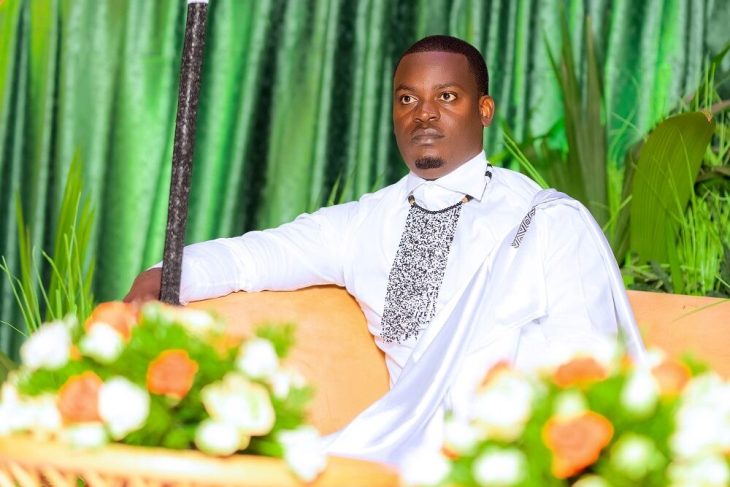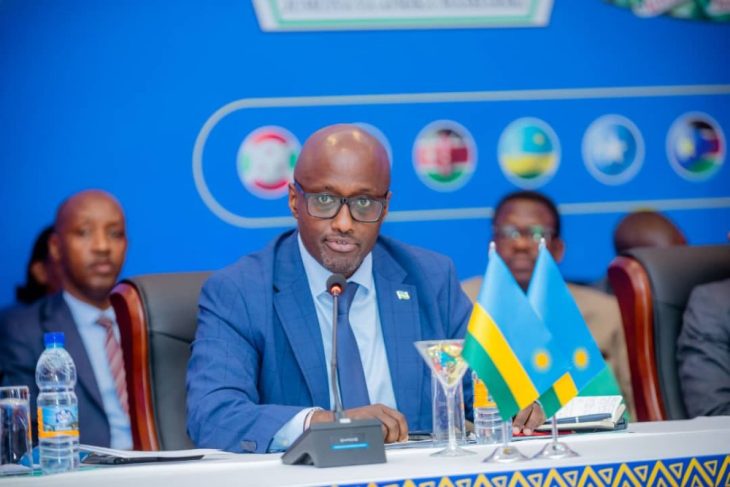
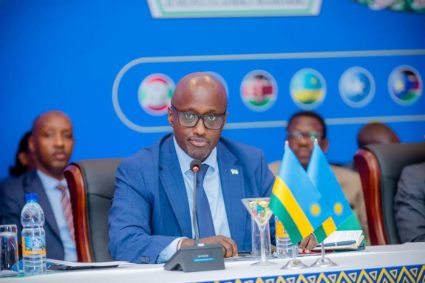


67 votes without the AU: Jacques Nshimirimana looks back on his UN campaign.

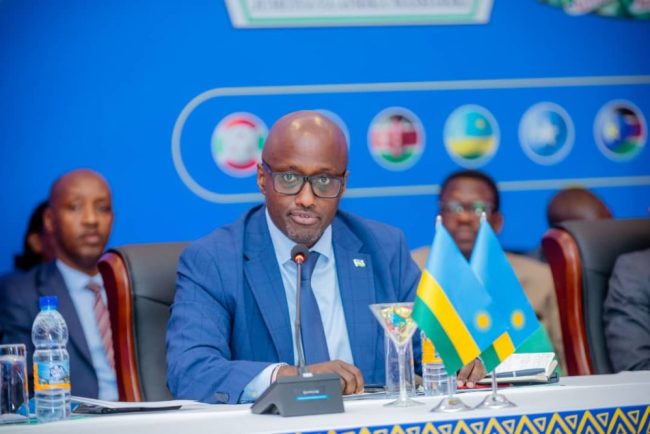
He wasn’t elected, but he made his mark on the election. Jacques Nshimirimana, the Burundian candidate for the UN Human Rights Committee, garnered 67 votes out of 175 voting states, finishing 10th out of 16 candidates.
This performance is all the more remarkable given that it took place without the official support of the African Union—and in the final hours, without even his name appearing on a document distributed to delegates. Interview.
You finished this election with 67 votes, without having been elected. How do you react to this result, in the immediate aftermath?
It’s a mixed feeling. There’s the immediate disappointment, of course—you run to win, not to achieve a respectable score. But there’s also a quiet sense of pride. Sixty-seven states chose to place their trust in me, even though my country was participating in this type of election for the first time, without a well-established diplomatic network for this kind of exercise, without continental endorsement. I take this number as a sign: there is a possible place for Burundi in these circles.
Six African candidates were initially in the running, and none had the official endorsement of the AU. How did you manage this lack of institutional support?
We knew from the outset that this would be a campaign of conviction, not a campaign for a mandate. Without endorsements, each vote had to be won individually—capital by capital, mission by mission. It’s slower, more demanding, but not necessarily an insurmountable obstacle. It simply requires a campaign of genuine grassroots engagement: direct meetings, substantive discussions about what I could contribute to the Committee, rather than simply relying on endorsements.
Your profile stood out from that of the other candidates — you were the youngest in the running. Did this work in your favor, or did it need to be compensated for?
Both, I believe. Some diplomats told me explicitly that they saw my candidacy as a sign of the necessary renewal of these institutions. Others, on the contrary, favored the accumulated experience of older candidates. It’s a calculation that each state makes in its own way. My role was not to turn my age into an argument, but to show that youth did not preclude a strong application—my background, my long-standing commitment to human rights issues, my knowledge of the Covenant.
Let’s return to the episode of the document distributed in the final hours before the vote, mentioning only two African candidacies as “endorsed by the AU”. How did you experience this moment?
I must admit, I was somewhat astonished. This document was based on a decision dating from October 2024, when we were voting on the 2026 renewal. Distributing it at that precise moment, in the final hours, without providing context, inevitably created confusion in the minds of some delegations. I don’t want to speculate on the intentions behind this approach. What I can say is that several missions subsequently contacted me to express their perplexity regarding this document. This at least demonstrates that diplomatic vigilance was effective: the delegations asked questions rather than taking the information for granted.
Do you think this episode had an impact on the final result?
It’s difficult to measure with certainty—these things can never be precisely quantified. What I do know is that the confusion introduced just hours before the vote never helps a candidate who doesn’t also have the safety net of an official endorsement. But I’m hesitant to say that this document swayed the election. The 67 votes obtained despite this tell me that many delegations had already made their choice well before this last maneuver, based on the dossier and the meetings we had held beforehand.
You have already announced that you want to try your luck again in 2028. What will change in your next campaign?
First, we won’t be starting from scratch. The Burundian candidacy is now known, recognized, and taken seriously by a significant number of states. This is an asset that won’t disappear in two years. Second, I believe we will need to address the issue of regional endorsement earlier and more systematically—not making it a condition, but recognizing its weight in the decisions of several delegations. Finally, this first campaign has been a learning experience: I’ve gained a better understanding of the mechanics of these elections, which are unlike any national election. Every vote is hard-won; it can never be decreed. This is the lesson I’m taking with me into 2028.
What lesson do you draw from all of this?
I have learned that within the United Nations, nothing replaces preparation, perseverance, and diplomatic dialogue. This experience has taught me to aim high and has allowed me to gain a better understanding of UN mechanisms, while also strengthening my network. An election is not an end, but a step: if my country renews its trust in me, I will be ready to take on this challenge again in 2028.